Why Engines Behave Differently in Extreme Weather
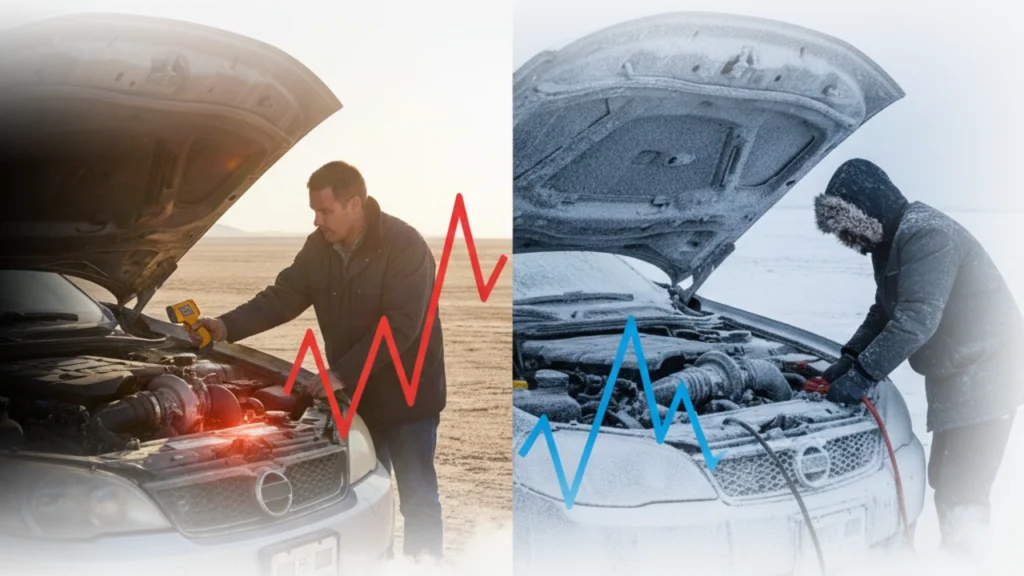
Engines are designed to operate within specific environmental ranges, yet real-world conditions often push them far outside those limits. From scorching summer heat to sub-zero winter mornings, extreme weather places unique stress on every mechanical and electronic system inside an engine. Temperature, humidity, air density, and even fuel chemistry can shift dramatically with the climate, changing how an engine starts, runs, and responds under load. For drivers, this can show up as slower acceleration, rough idling, unusual noises, or reduced efficiency. For engineers, these changes reveal how closely engine behavior is tied to physics and environmental conditions. Exploring why engines react differently in extreme weather helps drivers anticipate problems, maintain reliability, and adapt their driving habits when conditions become challenging.
How Extreme Weather Alters Engine Efficiency and Reliability
Extreme climate conditions influence far more than just how an engine feels during startup. Prolonged exposure to heat waves, cold snaps, or sudden weather shifts can affect efficiency, mechanical balance, and overall dependability. Internal components respond differently to stress depending on temperature and atmospheric conditions, which can change fuel burn patterns, friction levels, and heat dissipation. Over time, these variations may accelerate wear if the engine is consistently operated without adjusting driving habits or maintenance routines. Recognizing these effects helps explain why the same vehicle can perform noticeably differently across seasons or regions.
The Role of Temperature in Engine Performance
Temperature is one of the most influential factors affecting engine behavior. Engines rely on controlled combustion, precise clearances, and predictable fluid flow. Extreme heat or cold disrupts each of these elements.
In hot weather, engine components expand. Metal parts such as pistons, cylinders, and valves grow slightly in size, altering tolerances that were set at moderate temperatures. Engine oil also becomes thinner as temperatures rise, reducing its ability to maintain a stable lubricating film. This can increase friction and wear, especially during heavy loads or prolonged idling.
Cold weather has the opposite effect. Metals contract, tightening clearances. Engine oil thickens, making it harder to circulate during startup. This increases resistance, forcing the starter motor and battery to work harder just to turn the engine over.
Air Density and Combustion Changes
Engines are air-dependent machines. The amount of oxygen entering the combustion chamber directly affects how fuel burns.
- Cold air is denser, containing more oxygen per unit volume. This can lead to stronger combustion once the engine is warm, but it also makes cold starts more demanding.
- Hot air is less dense, reducing oxygen availability. This can lower power output, especially in naturally aspirated engines.
Modern engine control units adjust fuel delivery based on air temperature and pressure sensors, but extreme swings can still push systems close to their operating limits.
Fuel Behavior in Harsh Conditions
Fuel properties are not constant across temperatures. In very cold climates, fuel can thicken or partially gel, especially diesel. This restricts flow through fuel lines and injectors, making ignition difficult.
In extreme heat, fuel is more prone to vaporization. Vapor bubbles can form in fuel lines, interrupting the steady flow of liquid fuel to the engine. This phenomenon can cause hesitation, stalling, or uneven operation during hot starts.
Battery and Electrical System Stress
Weather extremes also affect the electrical side of an engine.
Cold temperatures slow the chemical reactions inside a battery, reducing its ability to deliver current. At the same time, the engine demands more power to overcome thickened oil and tighter mechanical clearances.
High temperatures accelerate chemical reactions, which can shorten battery life over time. Heat also affects sensors, wiring insulation, and control modules, sometimes leading to erratic signals or intermittent faults.
Cooling System Challenges in Heat
In hot environments, the cooling system operates near its upper capacity. Radiators must dissipate heat into already-warm air, which reduces heat transfer efficiency. Coolant temperatures rise more quickly during traffic congestion, towing, or uphill driving.
If cooling components such as hoses, fans, or thermostats are not in ideal condition, overheating becomes more likely. Even brief temperature spikes can trigger engine management responses like reduced power or altered ignition timing.
Lubrication Under Extreme Conditions
Engine oil is formulated to work across a range of temperatures, but extremes still affect its behavior.
- In cold weather, oil flows slowly, delaying lubrication to critical components during startup.
- In hot weather, oil thins out, which can reduce its ability to separate moving parts under high load.
These changes explain why oil grade selection is closely tied to climate and why seasonal oil recommendations exist for many vehicles.
Driver Perception and Real-World Effects
From the driver’s seat, extreme weather can make an engine feel unpredictable. Cold starts may involve higher idle speeds and delayed throttle response. Hot conditions can produce sluggish acceleration or increased fan noise as cooling systems work harder.
These reactions are not random faults but responses to environmental stress. Modern vehicles are programmed to protect engines first, even if that means altered performance until conditions stabilize.
Adapting to Weather-Driven Engine Behavior
Understanding how engines react to weather allows drivers to adjust habits accordingly. Gentle driving during warm-up, avoiding heavy loads in extreme heat, and paying attention to fluid condition all help maintain reliability across seasons.
Extreme weather does not change the fundamental design of an engine, but it reveals how sensitive that design is to temperature, air, and fluid dynamics. By recognizing these influences, drivers can better interpret what their vehicle is telling them when conditions push beyond the ordinary.
March 16, 2026
admin






Leave a Reply